Cupping, Gua Sha & Myofascial Release in Alpharetta: Inside Core57's Recovery Sessions
If you train hard — or you're simply on your feet all day — how you recover matters as much as the work itself. Recovery is where your body resets and rebuilds the mobility, stability, and flexibility that let you keep showing up, week after week.
At Core57 in Alpharetta, the questions we hear most about cupping therapy, Gua Sha, and myofascial release usually start the same way: “Which one should I book?” Here's the part that surprises people — at Core57, these aren't three separate services on a menu. They're three techniques that work together inside one holistic myofascial therapy session. Below is a plain-English look at each one, and how they combine, so you can walk in knowing exactly what to expect.
A quick note up front: these are wellness and recovery practices, not medical treatments. Everyone's body responds differently, and none of this is a substitute for advice from your doctor.
What Is Cupping Therapy?
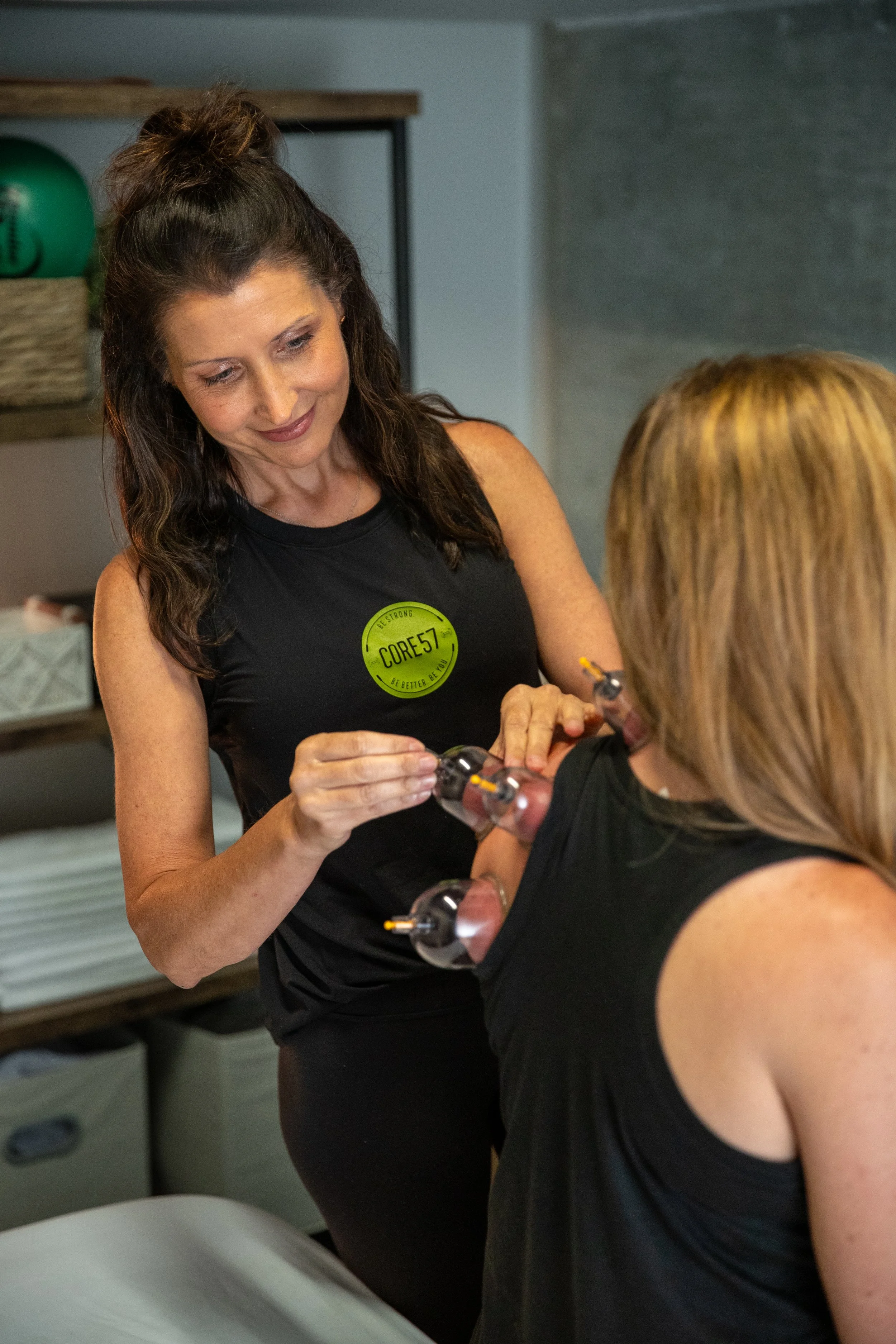
Cupping uses small cups placed on the skin to create a gentle suction. You may have seen the round marks it can leave — a bit like a temporary bruise — on swimmers and other athletes.
During a session, the cups are placed on areas like the back, shoulders, or legs and either left in place or moved slowly across the skin. The sensation is a firm, pulling pressure — intense for some people, deeply relaxing for others — and it can always be adjusted to your comfort.
Cupping delivers deep, sustained pressure with very little effort required on your part, which is exactly the role it plays in our sessions (more on that below).
What Is Gua Sha?
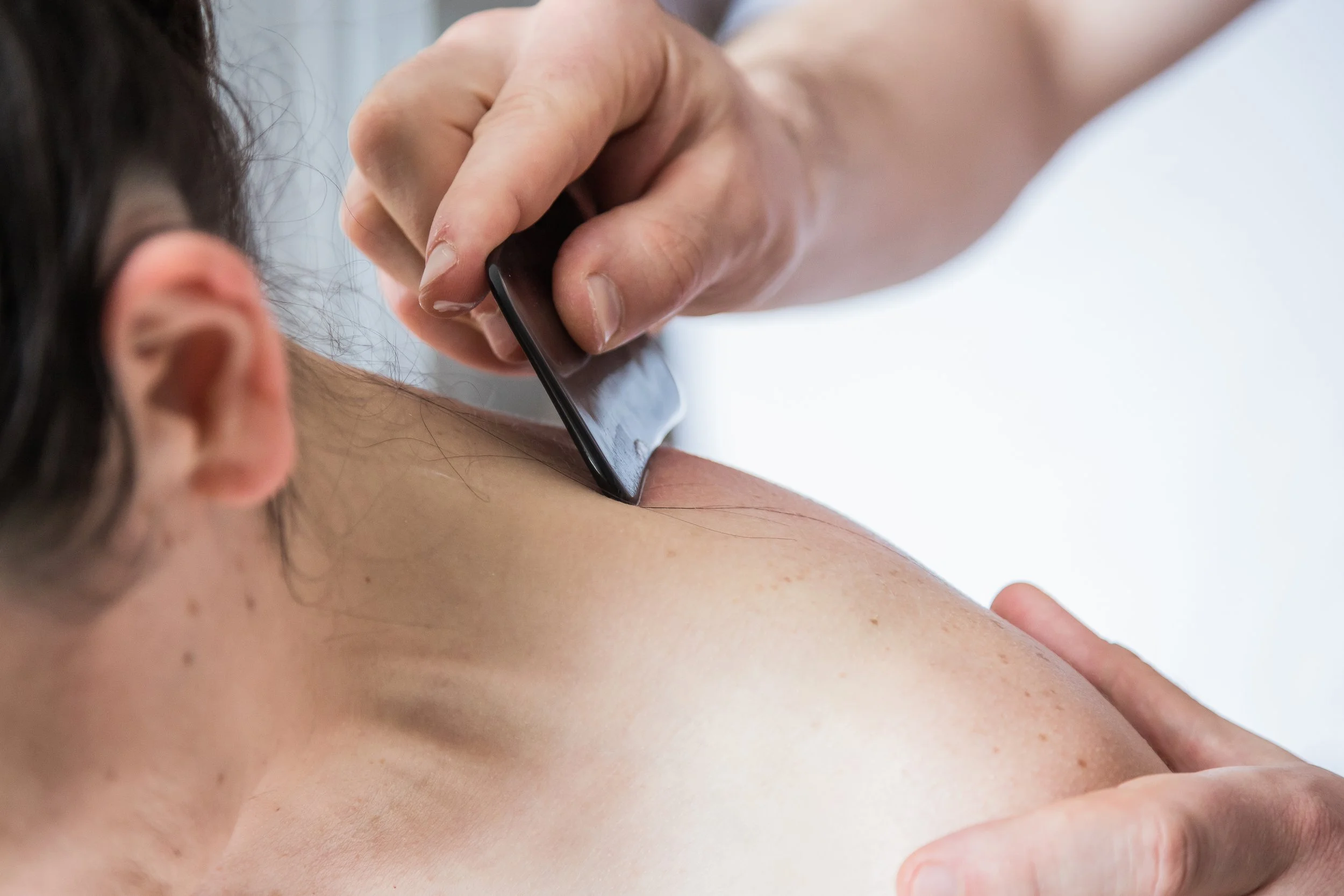
Gua Sha (pronounced “gwah-shah”) uses a smooth-edged tool to apply gentle, repeated strokes along the skin. It's been part of traditional wellness routines for a very long time. Lately the small facial version has shown up all over social media — but the body version is the one we're talking about here.
In a session, your practitioner uses the tool to stroke along the muscles in areas like the neck, shoulders, or calves. The pressure is fully adjustable, so it can be light or firmer depending on what feels good to you. As with cupping, it can leave temporary redness or marks that fade on their own.
That smooth, dynamic stroking makes Gua Sha a natural way to open a session — it warms up the tissue before deeper work begins.
What Is Myofascial Therapy?
To understand myofascial therapy, it helps to know one word: fascia. Fascia is the thin layer of connective tissue that wraps around your muscles — picture the gauzy film you sometimes see on a cut of meat. After a lot of training, sitting, or standing, that tissue and the muscles underneath can start to feel tight or “stuck.”
Myofascial therapy is the hands-on work that addresses exactly that — and at Core57, it's the umbrella everything else sits under. Cupping and Gua Sha aren't alternatives to myofascial work; they're tools within it, alongside sustained, targeted pressure and guided movement. People often describe the deeper pressure work as “good discomfort” that eases into a feeling of looseness.
One Session, Three Techniques: Core57's Three-Prong Approach
You won't walk in and order Gua Sha the way you'd order off a menu. Instead, you tell your practitioner what's been going on — a tight upper back from desk work, stiff hips, calves that won't loosen up — and the session is built around that. A typical session unfolds in three stages:
Gua Sha to start. Smooth, stroking passes (sometimes called “scraping”) warm up the tissue and let your practitioner feel where things are holding tension.
Cupping next. Cups are placed on the areas that need the most attention, adding that deep, sustained pressure to decompress the fascia.
Movement while the cups are on. This is the part most people don't expect — your practitioner guides you through dynamic movement designed to restore movement and hydration to the fascia while the cups do their work.
The three-prong approach is about getting at what's actually driving the tightness — not just chasing the spot where you feel it — so you leave moving, bending, and reaching more freely.
New to Recovery Work? Here's How to Start
If you've never tried any of this, don't overthink it. You don't need to research techniques or commit to a routine before you begin. The most useful first move is simply to try a session and notice how you feel — which sensations you find relaxing, where you tend to hold tension, and how recovery fits around your training week.
From there it gets easier to build a simple rhythm. Some people fold a session in after their tougher training days; others use it as a standalone way to unwind. There's no wrong way to start, and nothing you have to figure out alone — part of what we do at Core57 is help you read your own body and find an approach that's easy to keep up.
Recovery Therapy at Core57 in Alpharetta
At Core57, recovery isn't an afterthought — it's part of how we help our clients keep the mobility, stability, and flexibility to train well for decades. Our recovery sessions sit right alongside personal training, semi-private and small-group sessions, and nutrition coaching, so everything works together instead of in isolation.
We're proud to serve Alpharetta, Milton, and Roswell, along with the surrounding North Atlanta communities. Whether you're brand new to recovery work or you've been curious about cupping or Gua Sha for a while, the best first step is a simple conversation about your goals — no pressure, no commitment.
The easiest way to figure out what's right for you is to come in for a free goal-setting session. We'll talk through how you train, how you're feeling, and how recovery might fit — and you can decide from there.
Frequently Asked Questions
Does cupping or Gua Sha hurt?
Everyone's body is different, and experiences with these therapies are too. Cupping can feel very intense for some people, while others find it surprisingly relaxing. You'll feel pressure — a pull with cupping, a stroking motion with Gua Sha — and the intensity can be adjusted to your comfort. Both can leave temporary marks or redness that fade on their own.
How long does a recovery session take?
Sessions are 50 minutes, and you can usually head right back into your day afterward.
Do I choose between cupping, Gua Sha, and myofascial release?
No — at Core57 they work together in one session. Your practitioner listens to what's been going on and combines the techniques based on what your body needs that day.
What should I wear?
Comfortable, flexible clothing you can move in. For certain areas, loose layers that are easy to adjust work best.
Do I have to be a Core57 member to try recovery therapies?
The best starting point is a free goal-setting session, where we'll talk through your options and what makes sense for you. Reach out and we'll take it from there.
Curious to try it for yourself? Book your free goal-setting session at Core57 in Alpharetta, and we'll help you find the recovery approach that fits how you train and live. Call us at (470) 268-4744 or book online today.